
Low-Dose CT Scan
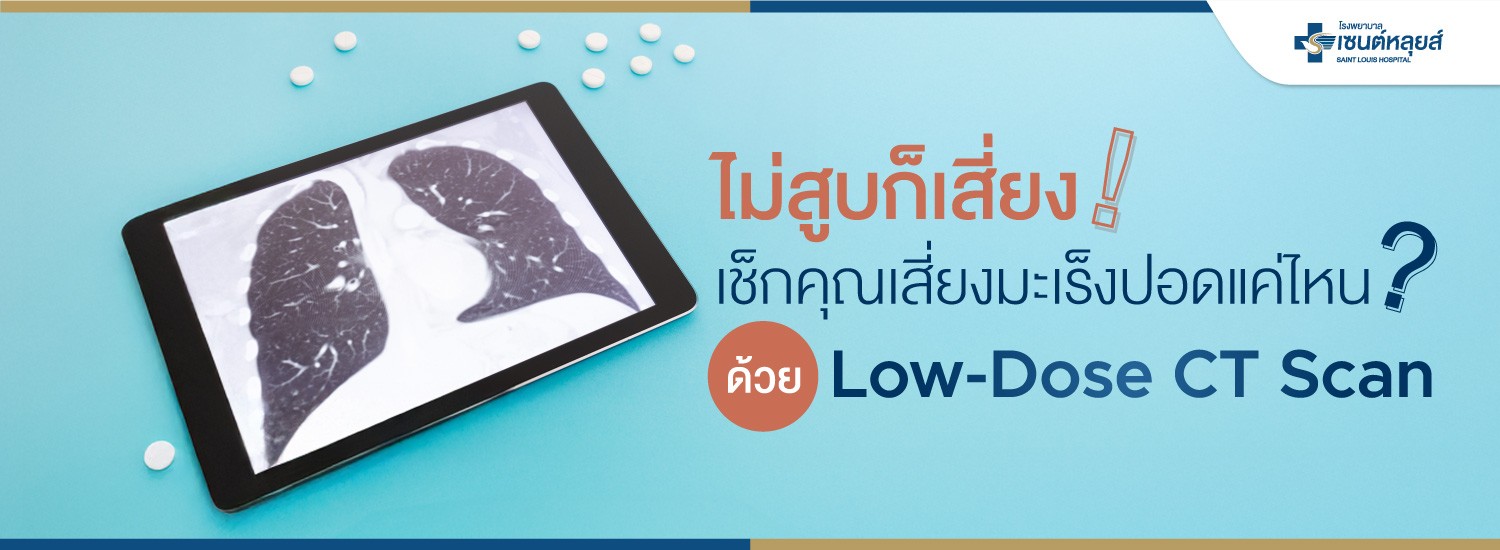
Even Non-Smokers Are at Risk
Check Your Risk for Lung Cancer with Low-Dose CT Scan
Lung cancer screening today commonly uses Low-Dose Computed Tomography (Low-Dose CT Scan).
This method can detect lung cancer at an early stage in about 60–90% of cases, which is up to four times more effective than a standard chest X-ray.
Who Should Consider Screening?
- Adults aged 50–80 years who have a smoking history of 20 pack-years or more
(calculated by the number of cigarette packs smoked per day multiplied by the number of years smoked),
and who currently smoke or quit within the past 15 years.
- Individuals who are frequently exposed to secondhand smoke
- People exposed to dust, smoke, or air pollution for long periods
(such as PM2.5 particles)
- Those with a family history of lung cancer
- Individuals who work closely with chemicals or carcinogenic substances
Early Screening Increases the Chance of Successful Treatment
Low-Dose CT Scan allows lung cancer to be detected at an early stage, even before symptoms appear.
The advantages include:
- Lower radiation exposure compared with conventional CT scans
- High-resolution imaging for more accurate diagnosis
- Ability to detect small nodules less than 1 cm, which may not be visible on a chest X-ray
- Minimal side effects
People in high-risk groups are recommended to undergo Low-Dose CT Scan screening annually.
Quick and Convenient Examination
Lung screening with Low-Dose CT Scan is simple and fast.
Patients do not need to fast or avoid drinking water before the examination, except in cases where contrast media injection is required.
The procedure takes only a short time, and results are available quickly.
Reviewed by:
Dr. Pornpan Rattanachiajaroen
Department of Internal Medicine
Saint Louis Hospital
Recommended Doctors