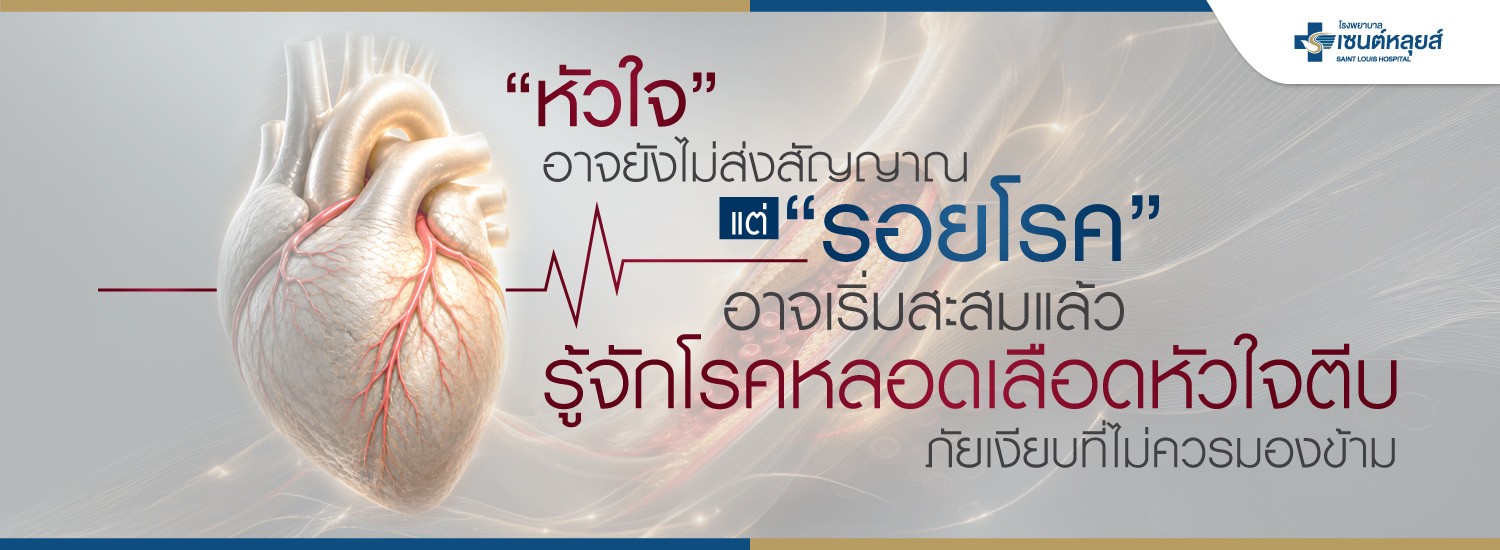
Your heart may not show warning signs yet, but ‘lesions’ could already be building up. Understanding Coronary Artery Disease: A silent threat you shouldn’t ignore.
When news breaks about the loss of someone from a sudden heart attack, many people often ask, “How can someone who looks so healthy have this happen so suddenly?” The truth is, coronary artery disease does not happen overnight. It typically takes years for degeneration and fat to accumulate inside the arteries without showing any warning signs.
How Do Hidden Lesions Form? Coronary arteries are like pipes that deliver blood and oxygen to the heart muscle. Over time, “the artery walls can accumulate fat, cholesterol, calcium, and other substances, forming plaque. This creates a lesion on the artery wall, causing the blood vessel to narrow.”
In the early stages, when the lesion does not significantly obstruct blood flow, patients usually do not experience any noticeable symptoms. It is not until the artery becomes severely narrowed, or a plaque ruptures causing an acute blood clot, that a sudden blockage occurs.
Warning Signs and Symptoms You Shouldn’t Ignore When the heart muscle does not receive enough blood, the body starts sending warning signs, especially during physical exertion or stress:
-
Chest tightness: Feeling uncomfortable or a tightness in the center of the chest, like a heavy weight is pressing down or a squeezing sensation.
-
Radiating pain: The pain may radiate to the jaw, neck, shoulders, left arm, or back.
-
Unusual fatigue: Panting, exhaustion, or shortness of breath even when doing normal activities.
-
Other associated symptoms: Faintness, dizziness, breaking out in a cold sweat, or nausea.
Who is at Risk?
-
People with underlying medical conditions such as diabetes, high blood pressure, and high blood cholesterol.
-
People who smoke or are regularly exposed to secondhand smoke.
-
Those who are overweight, lack exercise, and have chronic stress.
-
People with a family history of premature coronary artery disease.
-
Increasing age (men over 45, women over 55).
Don’t Wait for Symptoms: Get Checked for Early Prevention Assessing heart health and the risk of coronary artery disease can be done in several ways. A doctor will determine the most appropriate tests based on an individual’s symptoms and risk factors, such as:
-
Electrocardiogram (EKG/ECG)
-
Exercise Stress Test (EST / Treadmill test)
-
Echocardiogram
-
CT Calcium Score (Computerized tomography to detect calcium deposits in the coronary arteries)
Caring for your heart health starts with lifestyle modifications: eating a healthy diet, exercising regularly, and getting enough rest, along with undergoing appropriate health check-ups and risk assessments. Individuals with risk factors or abnormal symptoms should consult a doctor to consider further testing.
If you experience severe, sudden chest pain or tightness, especially accompanied by difficulty breathing, heavy sweating, faintness, or pain radiating to the jaw, shoulder, arm, or back, get to a hospital or seek emergency medical help immediately.
Recommended Doctors